Red String Bracelet Meaning: What It Symbolizes and How to Wear It
A red string bracelet is worn as a symbol of protection, good luck, and connection. Its most familiar form comes from Jewish folk tradition linked to Kabbalah, where a thin red wool thread is tied on the left wrist to guard against the “evil eye.” But the red string turns up in many cultures, including Hindu, Buddhist, Chinese, and Latin American ones, each with its own story. Below we explain what it means, which wrist to wear it on, and where the tradition comes from, with sources so you can read further.
What does a red bracelet mean?
Across cultures, a red bracelet is generally worn for the same handful of reasons: protection, luck, and love or connection. The color red is widely associated with vitality and warmth, which is part of why it appears in so many protective customs. “Red bracelet” can also mean a few different things. It might be a simple red string or cord, which is the focus of this guide, a beaded bracelet, or an evil-eye or azabache bracelet from Latin American tradition. They share a family resemblance but come from different places, so the specific meaning depends on the tradition behind it.
What does a red string bracelet mean?
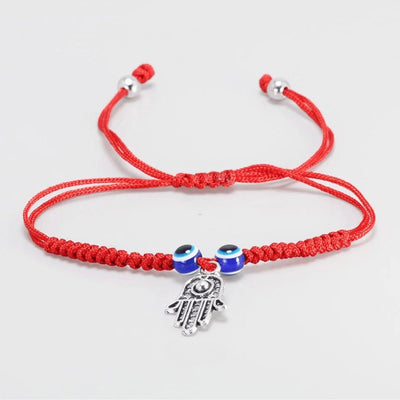
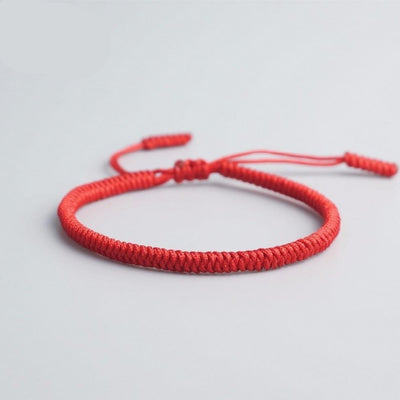
The red string is most often understood as a token of protection and good fortune. Its best-known version is the Kabbalah red string, a Jewish folk custom in which a thin scarlet wool thread is worn on the wrist to ward off misfortune brought about by the evil eye (My Jewish Learning). Many people also wear it simply as a reminder, whether of an intention, a person they love, or a value they want to carry through the day. It is not tied to a single religion, and similar red threads appear in Hindu, Buddhist, Chinese, and Latin American customs, which we cover below.
Red string on the left wrist meaning
In the Kabbalah tradition, the red string is worn on the left wrist. The left side is thought of as the receiving side of the body, so wearing it there is associated with taking in protection and positive energy (My Jewish Learning). If you are following this tradition, the left wrist is the usual choice.
Red string on the right wrist meaning
There is no single “right wrist” rule; it depends on the tradition. In Hindu custom, for example, the protective thread known as kautuka (also called mauli or kalava) is traditionally tied on the right wrist for men and the left for women (Wikipedia: Kautuka). Some people today simply choose the right wrist for personal or practical reasons rather than a specific belief. In short, the left wrist has a clear Kabbalistic meaning, while the right depends on which tradition you are drawing from.
The red string across cultures

Kabbalah and the Jewish folk custom
In Jewish folk practice associated with Kabbalah, a thin red wool thread is worn on the left wrist to protect against the evil eye (Wikipedia). It is often tied with seven knots, seven being a meaningful number in many traditions. A popular version of the custom says the thread is wound seven times around Rachel’s Tomb near Bethlehem before being cut into bracelets. It is worth knowing that this is a comparatively recent practice, and it is a claim often made by sellers rather than an ancient documented rite. A scarlet thread tied on the wrist does appear much earlier in the Bible, in Genesis 38, where a midwife ties one on the infant Zerah’s hand (USCCB, Genesis 38). Traditional teachers tend to describe the string as a folk custom rather than a religious obligation.
Christianity and Catholic belief
Some Christians, especially in Latin America, wear a red string as a cultural or personal devotion. There is no official Catholic teaching that endorses a protective red string. The Catechism actually cautions that attributing power to an object apart from genuine faith is a form of superstition (USCCB). So can a Catholic wear one? Yes, and many do, as a cultural custom or a simple keepsake. The tradition just asks that trust be placed in faith rather than in the thread itself. This is background rather than religious advice.
Mexican and Latin American tradition: mal de ojo and azabache
In many Latin American communities, red bracelets are connected to belief in mal de ojo, the “evil eye,” the idea that an envious or overly admiring gaze can cause harm, especially to babies (Britannica). Newborns are often given a protective bracelet, traditionally an azabache (a black jet stone) sometimes shaped as a small fist and paired with red coral or a red band. Customs vary from country to country and family to family. Here the red bracelet is less about Kabbalah and more about this distinct folk tradition of protection and blessing.
Buddhism
In some Tibetan Buddhist practice, a teacher or lama blesses and ties a protective cord, sometimes red, as part of a blessing. Related protective objects, such as the Tibetan namkha thread-cross, are also worn as talismans. A recurring symbol in these traditions is the endless knot, one of the Eight Auspicious Symbols, which represents interconnection and the way all things are woven together (Wikipedia: Endless knot). Practices differ between teachers and lineages, so there is no single universal “Buddhist red bracelet” rule.
Hinduism
In Hindu tradition, a protective thread called kautuka, also known as mauli, kalava, or raksha sutra, is tied on the wrist, usually during a ritual or blessing. It is often red or red-and-yellow, and is traditionally tied on the right wrist for men and the left for women (Wikipedia: Kautuka).
Chinese red thread of fate
In Chinese folklore, the “red thread of fate” is an invisible red cord said to connect people who are destined to meet, often as partners, and it is linked to the matchmaker deity Yue Lao (Wikipedia). This is a story about destiny rather than a rule about wearing a bracelet. The modern red-string bracelet inspired by it is a contemporary take on an old legend.
What the color red symbolizes

Part of the red string’s appeal is the color itself. Across many cultures red stands for life, warmth, strength, and love, which is why it appears again and again in customs meant to protect or to bind people together. Whatever tradition it comes from, a red string on the wrist tends to carry that same emotional shorthand: something vivid, alive, and meaningful.
How to wear a red string bracelet
There is no strictly right or wrong way to wear one. If you are following the Kabbalah tradition, the left wrist is customary, since it is seen as the receiving side. Many people wear the bracelet continuously and let it fall off naturally over time, and when it does, it is often taken as a sign that its purpose has been served. Beyond tradition, plenty of people simply like what it represents and wear it as a daily reminder of an intention or a connection.
How to make a red string bracelet
You can make a simple red string bracelet at home. All you need is a thin red wool thread or cord and a pair of scissors.
- Gather your materials: a thin red wool thread or a red cord you like.
- Measure and cut: allow enough to go comfortably around your wrist with a little extra, then cut.
- Start with a knot: tie a small knot at one end to secure it.
- Add seven knots: following the Kabbalah-inspired custom, tie seven knots along the thread. Many people pause on each knot to set an intention.
- Close it: after the seventh knot, join the two ends to complete the bracelet.
- Set your intention: if you like, focus on a specific hope or goal as you finish.
- Add a charm (optional): a small bead or charm can make it your own.
- Wear it: keep it on as long as feels right, and let it fall off naturally when the time comes.
If you would rather watch, here is a short video on how to tie a red string bracelet.

Shop our handmade red string bracelets
We handcraft red string bracelets in small batches, from simple cords to designs with silver and charms. Explore the full Red String Bracelet Collection.


Frequently asked questions
Which wrist should I wear a red string bracelet on?
In the Kabbalah tradition it is worn on the left wrist, seen as the receiving side. Other traditions vary. In Hindu custom, for instance, the protective thread is traditionally tied on the right wrist for men and the left for women.
What do the seven knots mean?
Seven knots are part of the popular Kabbalah-inspired custom. Seven is treated as a meaningful number in many traditions, and the knots are often tied while setting an intention. It is a folk practice rather than a formal religious requirement.
What does the Bible say about a red string bracelet?
The Bible does not prescribe wearing one. It does mention a scarlet thread tied on the wrist in Genesis 38, when a midwife marks the infant Zerah’s hand (USCCB, Genesis 38).
Can a Catholic wear a red string bracelet?
Yes. There is no official Church teaching against it, and many people wear it as a cultural custom. The Catechism does caution against treating any object as powerful in itself, apart from faith (USCCB).
Why do Mexicans wear red bracelets?
In many Latin American communities, red bracelets are linked to protection against mal de ojo, the evil eye, especially for babies, and are often paired with an azabache stone (Britannica).
Why do celebrities wear red string bracelets?
The red string became widely visible when the Kabbalah Centre popularized it in the late 1990s and 2000s, and a number of public figures were seen wearing it. For many it is a fashion statement or a personal token rather than a religious practice.
What does it mean when a red string bracelet falls off?
In the folk tradition, a bracelet that falls off naturally is often taken as a sign that it has done its job. There is nothing you need to do beyond replacing it if you would like to.
Can I get my red string bracelet wet?
Usually yes. Most are made from cotton or wool cord and are meant for everyday wear, though natural threads may fade or soften over time.
Sources
- Red string (Kabbalah), Wikipedia and My Jewish Learning
- Genesis 38, USCCB and Sacramentals, USCCB
- Evil eye, Britannica
- Kautuka, Wikipedia
- Red thread of fate, Wikipedia
- Endless knot, Wikipedia
Related reading: The Kabbalah Bracelet.